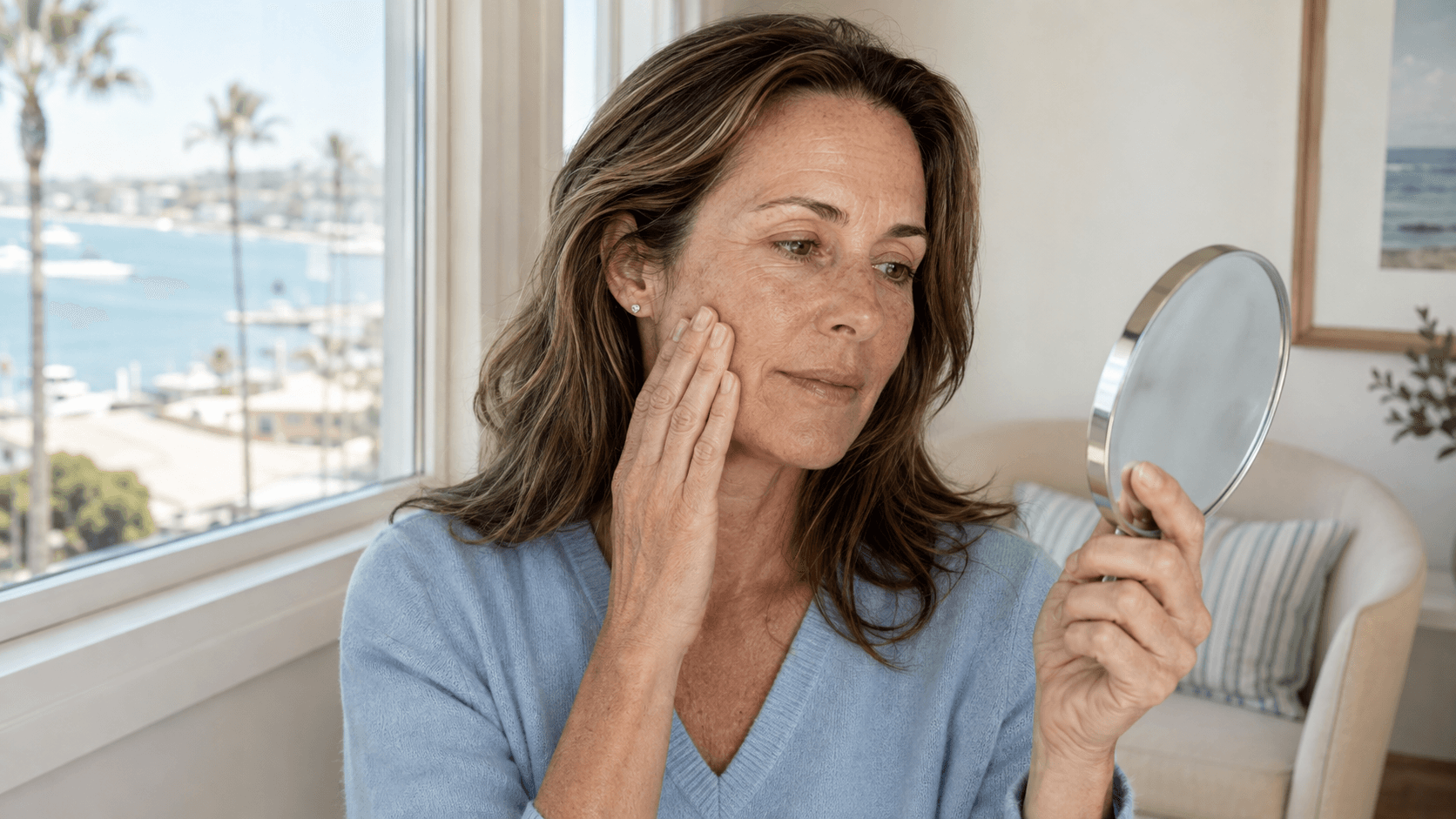
Brown spots, redness, and rough texture can appear in the same face, but they are not the same target. Fractional CO2 resurfacing creates controlled microscopic columns of injury to remodel surface and dermal tissue. IPL uses filtered light to target selected pigment and vessels. Chemical peels create a controlled chemical injury at a chosen depth. The best device name is not the starting point. Diagnosis, skin type, depth, color, recent sun exposure, medications, downtime, and pigment risk should choose the treatment.
Brown spots first need the right diagnosis
Freckles, solar lentigines, melasma, post-inflammatory pigment, and suspicious lesions can look similar to an untrained eye but respond differently. IPL may improve selected superficial sun spots in appropriate skin types, while melasma can worsen with heat or inflammation. A peel or resurfacing laser may address broader surface change, but neither should be used over an undiagnosed lesion. Changing, irregular, bleeding, or otherwise concerning spots deserve dermatologic evaluation. The IPL guide explains why pigment depth and contrast matter.
Redness may be vascular, inflammatory, or both
Visible small vessels and diffuse sun-related redness can respond to selected light-based treatment. Rosacea, dermatitis, acne inflammation, allergy, infection, and flushing triggers require a different plan. IPL parameters must respect skin tone and recent tanning because melanin competes for light energy. A CO2 laser is not automatically the best tool for vessels, and a medium-depth peel does not specifically close them. Treating redness without controlling active inflammation can produce short-lived improvement or aggravation.
Rough texture and fine lines require remodeling
Fractional CO2 treatment can create stronger remodeling for selected fine lines, scars, and rough photodamage, with more downtime and greater risk than a light treatment. Depth, density, passes, treatment area, antiviral planning, and skin preparation matter. The fractional CO2 guide explains why a stronger treatment is not automatically better. Microneedling with nanofat has a different and still evolving evidence base, and it should not be presented as an equivalent resurfacing laser.
Peel depth matters more than the word peel
Superficial peels produce limited exfoliation and often require a series. Medium-depth TCA reaches deeper and brings a more visible healing window, pigment risk, and strict aftercare. Concentration alone does not determine depth. Preparation, solution, number of coats, skin condition, and clinical endpoint all contribute. The TCA guide explains why medium-depth treatment is a medical procedure rather than a stronger facial. Combining modalities can be useful, but stacking inflammation without a reason increases risk.
Recovery and What to Expect
IPL often causes temporary redness, darkening of treated spots, and mild swelling, with crusting or pigment change possible. Fractional CO2 recovery is more involved, with heat, swelling, oozing or crusting, careful cleansing, sun avoidance, and progressive re-epithelialization according to depth. Medium-depth peels create predictable peeling and redness that can last beyond visible shedding. Improvement evolves over weeks to months. Pain out of proportion, blistering, spreading redness, fever, pus, eye symptoms, or delayed healing requires prompt contact.
Are You a Candidate?
Candidacy depends on an accurate diagnosis, Fitzpatrick skin type, tendency to hyperpigment or scar, sun habits, medications, herpes history, active conditions, health, downtime, and goals, not age alone. Recent tanning, active infection, open skin, poorly controlled disease, isotretinoin history that changes healing assessment, or inability to avoid sun may delay treatment. Darker skin can be treated, but often with different modality, settings, preparation, and expectations. A patch test or staged approach may be appropriate.
Online education can help you ask better questions, but it cannot measure anatomy, review records, perform an examination, or calculate personal risk. Keep a written list of symptoms, prior treatments, medicines, medical conditions, work and caregiving duties, and the result you hope to achieve. Those details often change the recommendation more than a trend, technique name, or photograph found online.
Frequently Asked Questions
Which treatment is best for brown spots? It depends on the diagnosis and skin type. Selected sun spots may respond to IPL, while melasma or suspicious lesions require a different pathway.
Does IPL improve rough texture? It may create modest overall improvement, but its main strengths are selected pigment and vascular targets. Deeper texture often needs another approach.
Is CO2 always stronger than a peel? Strength cannot be compared by name alone. Laser settings, peel depth, treatment area, and skin response determine effect and risk.
Can all three be done together? Sometimes treatments are sequenced, but combining them in one session is not automatically better and can increase inflammation and pigment risk.
Schedule a Consultation in Newport Beach
Dr. Ruben Castro evaluates the visible concern, skin type, medical history, sun exposure, and acceptable downtime during a private Newport Beach consultation. Bring a list of skin products, prescriptions, prior devices, peels, reactions, and herpes history. Dermal filler addresses volume and is not a substitute for pigment or texture treatment. The most useful plan names the problem in plain language, selects the least intensive treatment likely to address it, and protects the skin barrier before chasing a more dramatic recovery.