
About Dr. Ruben Castro
PLASTIC SURGEON · NEWPORT BEACH
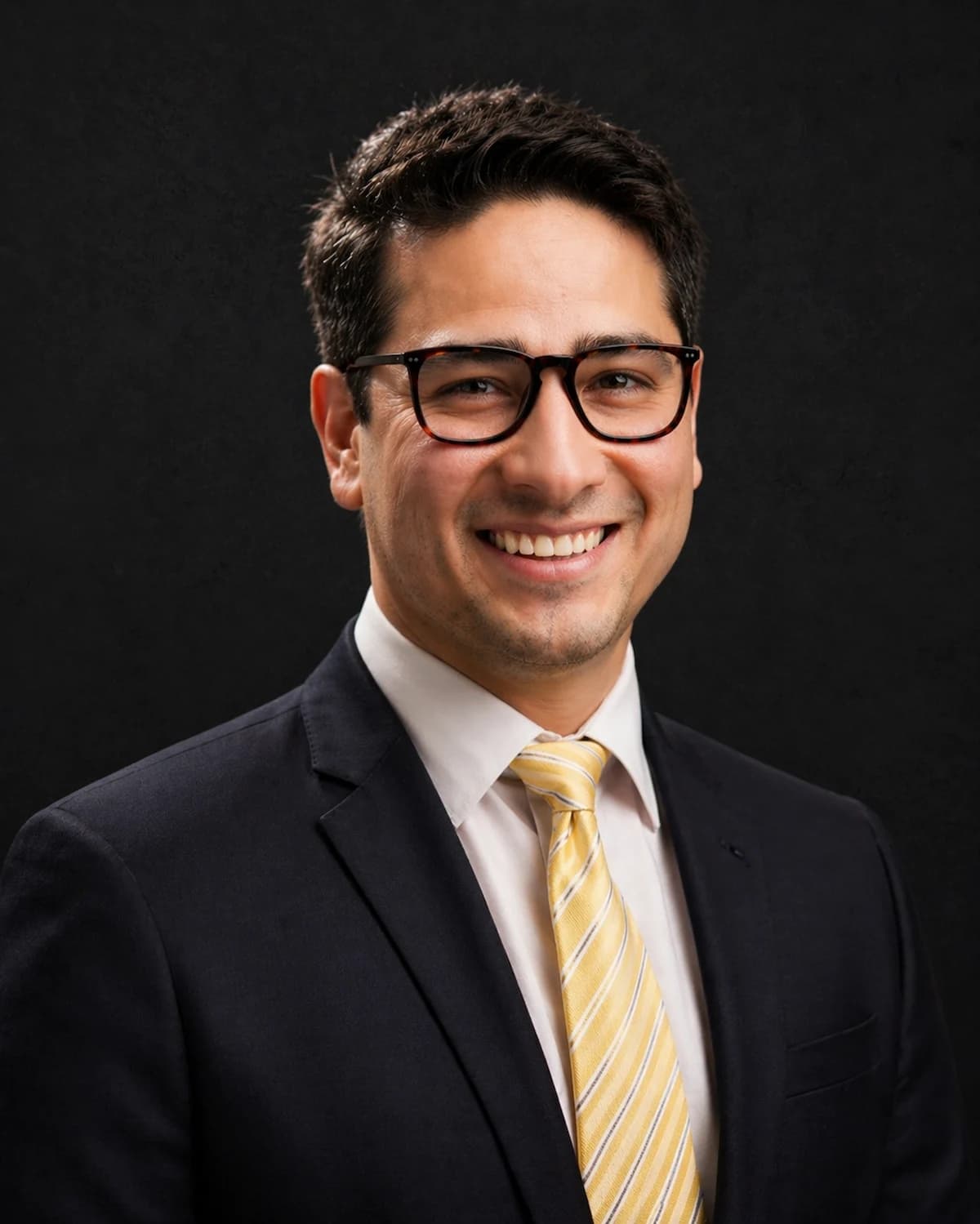
Ruben Castro MD
PLASTIC SURGEON
My job is not to make someone look operated on. It is to understand what changed, decide what is worth changing, and leave the person recognizable.
A Different Path to Surgery
From the Navy to Medicine
I did not take a conventional path into plastic surgery. Before medical school, I served as a Hospital Corpsman in the United States Navy.
The work taught me to prepare before I was needed, stay composed when circumstances changed, and take responsibility past the edge of the immediate problem. Those habits stayed with me. In surgery, the operation matters. So do the decisions made before it, the conversation around it, and the care that follows.
After the Navy, I earned my medical degree at the David Geffen School of Medicine at UCLA, then completed a six-year integrated plastic surgery residency at UC Irvine's Aesthetic & Plastic Surgery Institute, training across reconstructive and aesthetic surgery. I serve there today as volunteer clinical faculty.
Advanced Aesthetic Training
The Connell Fellowship
Residency was not the end of my training. I pursued further specialization through the Bruce Connell Aesthetic Surgery Fellowship, concentrating on primary and revision surgery of the face, breast, and body.
With Timothy Marten, MD, I studied facial rejuvenation built on a detailed reading of facial anatomy: where incisions belong, how tissue actually moves, and what determines scar quality years later. With S. Ozan Sozer, MD, I trained in advanced facial and body contouring, including the Glidelift™, a hidden-scar technique Dr. Sozer developed and that I now offer in Newport Beach.
What I took from that year was not a longer list of operations. It was how experienced aesthetic surgeons think: how they find the real source of a concern, choose between techniques that all look reasonable on paper, anticipate the tradeoffs, and recognize when an operation should not be done at all.
Surgical Philosophy
Natural Does Not Mean Minimal
A natural result is not necessarily a small one. It is a change that respects your anatomy, your proportions, your expressions, and your identity.
I plan surgery from the underlying structure outward. Skin quality, deeper support, fat distribution, muscle, bone, scars, and previous operations all shape the plan. I am thinking about how a result will look a few weeks after surgery, and also about how it will move, settle, scar, and age.
I do not believe every concern has a surgical answer, or that the procedure someone asks for is always the right one. Sometimes the better recommendation is a different operation. Sometimes it is a staged approach, a nonsurgical treatment, more time, or no surgery at all.
The goal is not to sell a procedure. It is to work out whether surgery can deliver an improvement worth its cost in scars, recovery, risk, and maintenance.
Safety
Safety Is a Planning Decision
The safest operation is the one that was chosen correctly and planned completely. Most of what protects a patient happens before the day of surgery.
That means an honest assessment of health history and risk factors, a clear reason for every part of the plan, and a willingness to stage a long operation or decline one when the risk does not justify the benefit. Combining too many procedures in a single sitting is a common way for an elective operation to become a serious one.
It also means telling you what can go wrong before you decide, not after. You should hear the realistic complication profile of your operation, how it would be managed, and what recovery genuinely asks of you. That is what makes a decision an informed one.
The Consultation
A Clear Recommendation, With the Reason Behind It
A consultation starts with what you see, not with an operation I already have in mind.
I want to understand what bothers you, why you are considering surgery now, what outcome would feel worth it, and what you do not want to lose or change. Only then do I examine the anatomy and walk through the options.
The conversation is direct. What surgery can reasonably do, where the scars would sit, what recovery actually involves, what may stay imperfect, and which complications are worth weighing.
You should leave knowing more than the name of a procedure. You should understand the diagnosis, the plan, the alternatives, and why this recommendation fits you specifically.
Credentials
- Affiliations
- UC Irvine Medical Center
- Hoag Memorial Hospital Presbyterian, Newport Beach
- Fellowship:
- Bruce Connell Aesthetic Surgery Fellowship
- Residency:
- Integrated Plastic Surgery, University of California, Irvine
- Medical school:
- David Geffen School of Medicine at UCLA
- Undergraduate education:
- University of California, San Diego
Schedule a Consultation
Consultations are private, unhurried, and held at my office in Newport Beach. If you are considering surgery, or simply want a clear diagnosis before you decide anything, I am glad to talk.
Request a Consultation