Male Rhinoplasty
Refine the nose while keeping strong, masculine features.
What Is a Male Rhinoplasty?
Male rhinoplasty reshapes the nose in men, whether to straighten a hump, refine a wide or drooping tip, correct a crooked nose, or improve breathing. The aesthetic goal in men is different from women: a straight, strong profile rather than a scooped or delicate one, a tip that is refined but not overly narrowed, and features that stay masculine and in balance with a stronger brow and jaw. It can be purely cosmetic, purely functional for breathing, or both, and a natural result that still looks like you is the priority.
Schedule a Consultation
- Anesthesia
- General anesthesia or IV sedation
- Estimated Duration
- 2 to 4 hours
- Downtime
- 1 to 2 weeks for the visible part
- Return to Work
- Many patients return to work in about one to two weeks, once the splint is removed
Surgical Technique
Male rhinoplasty can be performed closed, with incisions inside the nose, or open, with a small hidden incision across the columella for more complex work. The bone and cartilage are reshaped to straighten the profile, refine the tip, and improve symmetry, and a deviated septum or airway problem can be corrected at the same time. In men, the surgeon preserves a straight, stronger dorsal line and avoids over-reducing the bridge or over-narrowing the tip, which can feminize the nose. Preservation and structural techniques may be used depending on the anatomy.
Who Is a Good Candidate for Male Rhinoplasty?
Good candidates are men who want to straighten a hump, refine the tip, correct a crooked nose, or breathe better, and who want a natural result that keeps masculine proportions. Healthy nonsmokers heal more predictably. The plan respects a stronger brow, jaw, and profile rather than creating a delicate nose. Final recommendations depend on an in-person exam of the nose and breathing, skin thickness, and goals. Thicker male skin can affect how quickly the tip refines.
Recovery
A splint on the nose and some bruising and swelling around the eyes are expected in the first week. The splint usually comes off in about a week, when most men feel presentable. Swelling settles gradually, and the tip in particular can take many months to a year or more to show its final, refined shape, especially with thicker skin. Nasal congestion during early healing is normal.
Days 1 to 7
A splint protects the nose and bruising and swelling appear around the eyes. Keep the head elevated, rest, and avoid bumping the nose. The splint usually comes off near the end of the week.
Weeks 2 to 4
Most men return to work and social settings as bruising fades. Congestion improves and avoiding contact activity continues.
Months 1 to 3
Visible swelling settles and the shape looks more natural, though the tip is still refining.
Months 3 to 12
The tip continues to refine and the final shape appears, taking a year or more with thicker skin.
Male Rhinoplasty Risks & Considerations
Risks include bleeding, infection, difficulty breathing, an irregularity or asymmetry that may need revision, over-reduction that can look unnatural or feminized, and a result that changes as swelling resolves over a year or more. Numbness of the nasal tip and prolonged swelling are common early. Because the final shape takes time and revision is sometimes needed, careful planning and conservative reduction matter, particularly to preserve masculine features.
- Bleeding or infection
- Persistent nasal congestion or breathing difficulty
- Asymmetry or contour irregularity
- Over-reduction or a feminized result
- Prolonged tip swelling, longer with thick skin
- Numbness of the nasal tip
- Possible need for revision
Alternatives to Male Rhinoplasty
A nonsurgical or liquid rhinoplasty uses filler to camouflage a small hump or minor asymmetry without surgery, but it adds volume rather than reducing it and is temporary. A chin implant can balance the profile when a weak chin makes the nose look larger, sometimes alongside rhinoplasty. For a lasting change to the shape of the nose or to improve breathing, surgical rhinoplasty is the definitive option, planned to keep masculine proportions.
Male Rhinoplasty vs Chin Implant
The nose and chin work together to balance the profile. Rhinoplasty reshapes the nose itself. A chin implant strengthens a weak or receding chin, which can make the nose look more proportionate without changing the nose. When a man has both a prominent nose and a weak chin, addressing the chin, alone or with rhinoplasty, can improve the whole profile.
Chin ImplantMedical Sources
Male Rhinoplasty - Frequently Asked Questions
- How is male rhinoplasty different?
- The technique is similar, but the aesthetic goal differs. In men the aim is a straight, strong profile and a refined but not overly narrow tip, keeping the nose masculine and balanced with a stronger brow and jaw.
- Can it fix my breathing too?
- Yes. A deviated septum or other airway problem can be corrected during the same operation, which is common when men have both cosmetic and functional concerns.
- Open or closed rhinoplasty?
- It depends on the work needed. Simpler cases may be done closed, with all incisions inside the nose, while more complex reshaping often uses an open approach with a small, well-hidden incision.
- When will I see the final result?
- The splint comes off in about a week, but swelling settles over months, and the tip can take a year or more to fully refine, especially with thicker skin.
- Will my nose look done or fake?
- The goal is a natural nose that still looks like you and stays masculine. Conservative, structure-preserving technique avoids an over-reduced or feminized look.
- Can rhinoplasty be combined with a chin implant?
- Yes. Balancing the profile with a chin implant can make the nose look more proportionate, and the two are sometimes done together.
Plan your visit
Explore financing options and patient resources as you prepare for your consultation. If you are visiting from out of town, use our travel guide to plan your trip and stay.
Ready to talk through your options?
Every plan begins with a conversation about your anatomy, your goals, and whether this is genuinely the right procedure for you.
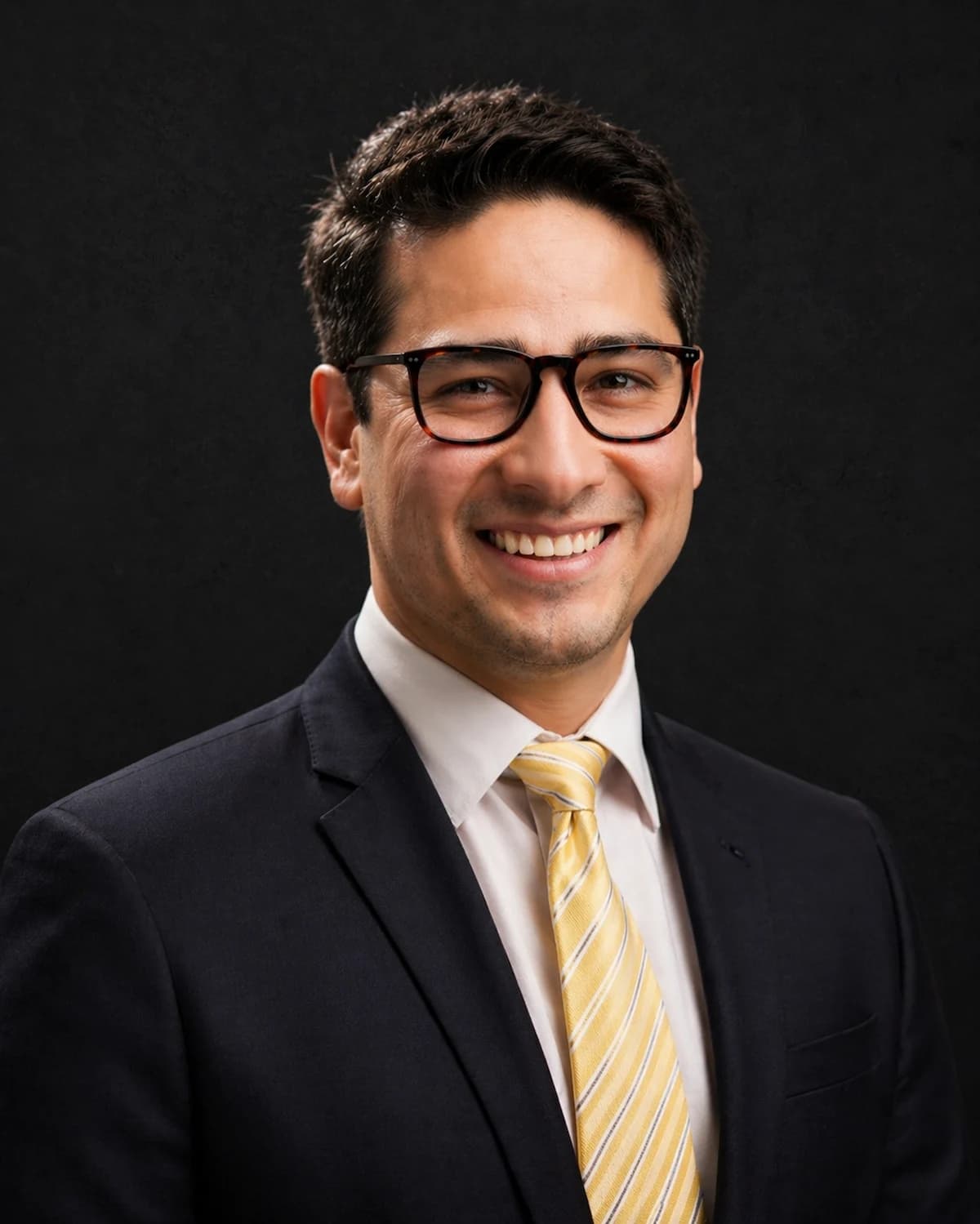
Schedule a ConsultationPerformed by Dr. Ruben Castro in Newport Beach, California