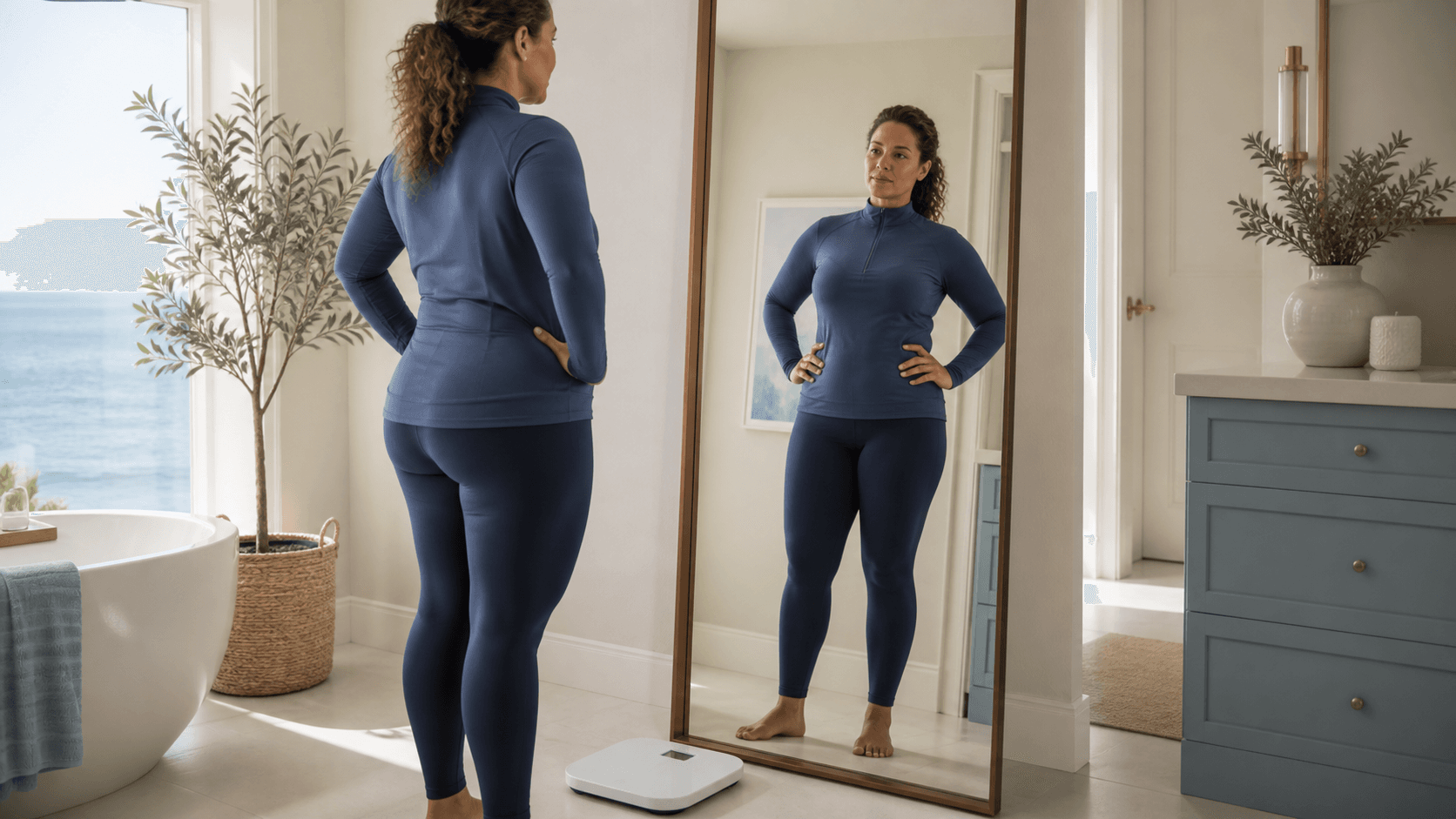
Liposuction removes localized subcutaneous fat to change shape. It is not a treatment for obesity, visceral fat, metabolic disease, or a substitute for sustainable weight management. A patient may see a meaningful contour change with only a modest change on the scale because the operation targets proportions rather than total body mass.
Is five liters a safe limit?
Professional guidance commonly describes more than 5,000 cc of total aspirate as large-volume liposuction. Total aspirate includes fat and fluid, not five liters of pure fat. The number does not mean that 4.9 liters is automatically safe or that a higher amount is appropriate for every body.
Safety depends on body size, health, treated areas, fluid management, anesthesia, duration, facility, other procedures, and postoperative monitoring. Research also suggests that body weight affects risk, which is why a single universal maximum is too simple.
Why do more treated areas add risk?
Combining extensive liposuction with major skin removal increases operative time and fluid shifts. Staging can be the safer choice. Blood clots, fluid imbalance, anemia, lidocaine toxicity, contour irregularity, infection, and fat embolism are among the risks that make volume planning medical, not promotional.
What can liposuction not remove?
Liposuction cannot remove fat inside the abdominal cavity. It also cannot tighten significant loose skin or repair muscle separation. Our guide to skin, fat, and muscle separation and the comparison of liposuction versus skin removal explain why more suction can sometimes worsen the visible problem.
After major weight loss, body lift or arm lift planning may address tissue that suction cannot.
Frequently Asked Questions
How many pounds will I lose? Weight change is unpredictable and is not the appropriate outcome measure. Contour, clothing fit, symmetry, and safe recovery are more relevant.
Can I request the maximum amount? The amount should follow anatomy and safety. Treating less or staging may produce a better and safer result.
Is awake liposuction safer? Anesthesia label alone does not establish safety. Patient selection, medication dose, sterility, monitoring, facility, and operator all matter.
Plan for contour, not a volume target
If you are unsure how much liposuction is reasonable for you, an examination can set a contour goal rather than a liters target. Dr. Ruben Castro evaluates fat distribution, skin elasticity, visceral fullness, medical risk, body size, medications, nicotine, goals, and proposed combinations during a Newport Beach consultation. Patients receive a contour plan, not a liters target. A tummy tuck or observation may be more appropriate when skin and fascia dominate. The objective is a proportionate improvement within a conservative safety plan, not the largest amount that can technically be removed.