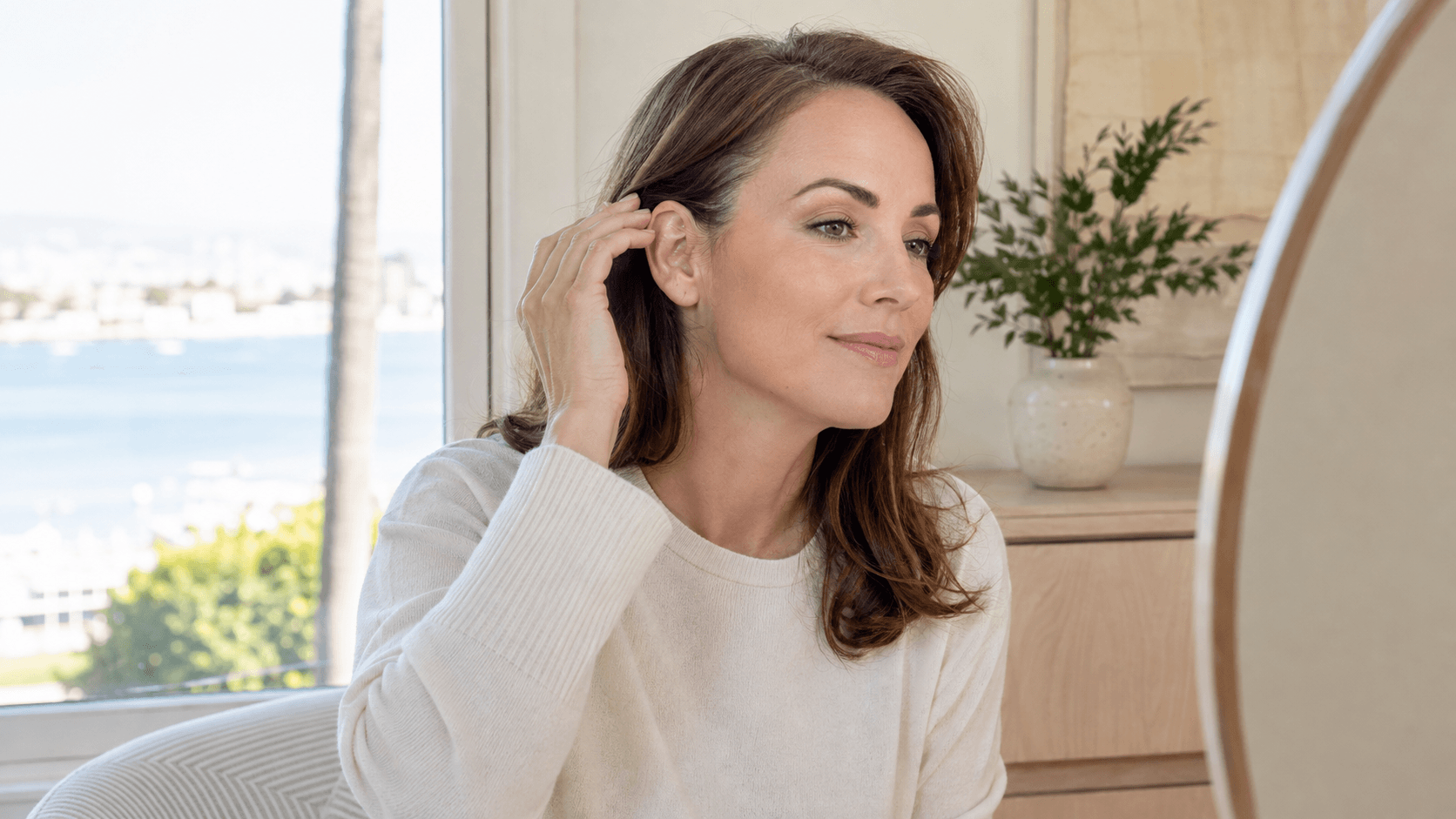
Adults can have otoplasty well after age 30. The cartilage is more mature and may be firmer than in a child, but it can still be reshaped, supported, or repositioned in an appropriate candidate. Adult planning often centers on privacy, work, glasses, headphones, helmets, sleep, exercise, and a lifetime of strong preferences about ear position. The aim is not to paste the ears flat or make two sides identical. It is to reduce the specific prominence or shape concern while preserving natural curves and proportion.
Prominent ears do not all share one cause
Some ears project because the antihelical fold is underdeveloped. Others have a deep conchal bowl, outward earlobe, upper-pole prominence, asymmetry, or a combination. Each pattern may require different suturing, cartilage scoring, limited cartilage removal, or lobe treatment. A front photograph alone cannot show the full anatomy. Evaluation from front, side, back, and above helps define which part should move and which should remain. An operation designed for one cause can look unnatural when applied to another.
Adult cartilage changes technique, not eligibility
Mature cartilage may be stiffer and have stronger memory, which can influence the amount of shaping or support required. Skin thickness, old injuries, prior surgery, piercings, keloid history, and differences between sides also matter. No technique guarantees that cartilage will never relax or that sutures will never become palpable. Recurrence, contour irregularity, asymmetry, suture irritation, infection, skin problems, and revision are recognized risks. The correct approach balances stability with preservation of a soft, believable ear contour.
Scars and sensation deserve attention
Many approaches place an incision in the groove behind the ear, where it is less visible from common angles. Hidden does not mean absent. A new scar can be pink, firm, itchy, wide, or raised and takes months to mature. People with keloid or hypertrophic scars should disclose that history. Temporary numbness, tingling, or sensitivity can occur. If a scar becomes painful, progressively raised, or tethered, scar evaluation may be relevant, although no treatment guarantees an invisible line.
The practical adult questions are often the most important
A child may need protection from play, while an adult may need to plan video meetings, public-facing work, over-ear headphones, hard hats, sports helmets, haircuts, and side sleeping. Clothing that pulls over the head can catch the ears. Glasses and hearing devices may interact with dressings. The otoplasty recovery guide explains why the support garment and activity schedule follow the actual technique. Social timing should include visible swelling and the possibility of a headband.
Recovery and What to Expect
A soft dressing or wrap may be used early, followed by a headband schedule according to the surgeon. Swelling, pressure, tenderness, and temporary sensory change are common. Back sleeping protects the ears until direct pressure is allowed. Desk work may resume before sports, helmets, swimming, and heavy training. Rapidly increasing one-sided pain or swelling, bleeding, fever, spreading redness, drainage, wound opening, or a concerning color change needs prompt contact. Final shape, scar softness, and symmetry should be judged over months rather than days.
Are You a Candidate?
Candidacy depends on the exact cartilage pattern, skin, scar history, health, nicotine status, goals, and ability to protect the ears, not age alone. An adult should be choosing surgery voluntarily and have a stable concern rather than acting under pressure from a partner or social trend. Active skin infection, uncontrolled illness, nicotine exposure, unrealistic expectations, or inability to avoid headwear and impact can delay treatment. Prior otoplasty requires records when available and may carry different scar and blood-supply considerations.
Online education can help you ask better questions, but it cannot measure anatomy, review records, perform an examination, or calculate personal risk. Keep a written list of symptoms, prior treatments, medicines, medical conditions, work and caregiving duties, and the result you hope to achieve. Those details often change the recommendation more than a trend, technique name, or photograph found online.
Frequently Asked Questions
Is ear cartilage too hard to reshape after 30? No. Adult cartilage can be reshaped, although its firmness and memory may influence technique and recurrence risk.
Will I need a visible haircut? Hair can help with privacy, but wound care and access matter. Ask when styling, coloring, and salon visits are safe.
Can both ears be made identical? No natural ears are perfectly identical. Surgery aims for improved balance and proportion, not mathematical symmetry.
Can I wear headphones after surgery? Avoid pressure until cleared. Timing depends on incision, swelling, cartilage work, device fit, and healing.
Schedule a Consultation in Newport Beach
Dr. Ruben Castro evaluates adult ear cartilage, folds, projection, lobes, asymmetry, scars, and daily headwear during a private Newport Beach consultation. The relationship to the nose and chin can be reviewed with the profile balance guide, although rhinoplasty and ear surgery are separate decisions. Bring photographs showing the angles that bother you and a list of helmets, glasses, or hearing devices you use. The goal is an ear that attracts less attention because it fits naturally, not because it looks surgically flattened.